Autumn has always held a special kind of magic, a season where the world seems to set itself ablaze in a final, glorious display before the quiet slumber of winter. For those who chase the turning leaves, the journey from Benxi in China’s northeast to the mystical heights of Guangwu Mountain in the south is not merely a trip; it is a pilgrimage along the very spine of the country’s fall foliage front. This is a report from the road, a narrative woven from the crimson and gold tapestry of the season.
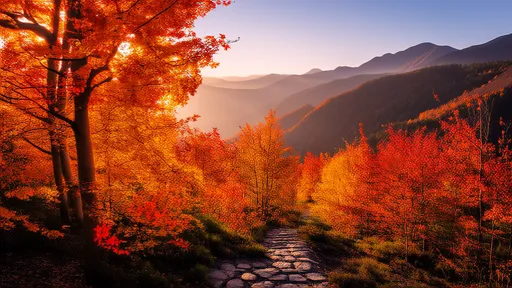
The journey begins in the crisp, clear air of Liaoning province. Here, in the forests surrounding Benxi, the maples are the undisputed stars of the show. The transformation starts subtly in the higher elevations. A single branch of fiery red appears like a signal flare against the deep green canopy, a promise of the spectacle to come. Within a week, the hillsides are awash in color. It is a painter’s palette come to life—vermilion, amber, maroon, and flashes of persistent green. The local guides, their faces etched with the wisdom of countless seasons, speak of a "color wave" that slowly cascades down the mountainsides, a natural phenomenon dictated by the dropping nightly temperatures.
Traveling southward, the character of the autumn display begins to shift. The forests of Henan and Shaanxi introduce a broader cast of deciduous trees. Oaks add their rich, russet browns, while ginkgo trees lining ancient temple pathways shower the ground in a breathtaking carpet of pure gold. The air here is often thicker, carrying the smoky scent of wood fires and the earthy perfume of fallen leaves. The foliage progression feels more stately, less of a dramatic explosion and more of a gradual, dignified changing of the guard. Villages nestled in these valleys become perfect vantage points, their grey-tiled roofs and whitewashed walls providing a stark, beautiful contrast to the riot of color climbing the hills behind them.
Then, the landscape rises dramatically to meet the Sichuan basin. The final destination, Guangwu Mountain, is less a single peak and more a vast, rolling sea of forest that erupts into color. The experience here is profoundly different. The elevation creates a unique microclimate where mist is a constant companion. This is where the magic truly happens. The famous sea of clouds settles in the valleys each morning, and as the sun struggles to break through, its rays filter through the mist, setting the already vibrant red and yellow leaves aglow. They do not just boast color; they appear to illuminate from within, creating a scene of such ethereal beauty it feels more like a dream than reality. The local Yi people have legends about these mountains, tales of spirits painting the leaves each year to guide their ancestors home. Standing there, witnessing the light dance through the crimson haze, it is not a difficult story to believe.
The act of leaf-peeping, as it is so charmingly called, is as much about the human experience as the natural one. Scenic highways become ribbons of slow-moving traffic, not with frustrated commuters, but with families in minivans and photographers with tripods strapped to their backpacks, all united by a shared sense of wonder. At every official viewpoint and countless unofficial pull-offs, you find people of all ages. There are elderly couples, holding hands and pointing out particularly splendid trees, their smiles mirroring the joy they felt in younger years. There are children scrambling over rocks, collecting handfuls of the most perfect leaves to press into books later, their pockets bulging with natural treasures.
This pursuit connects people not only to nature’s cycle but to each other, creating fleeting communities bound by appreciation. You share a thermos of hot tea with strangers on a windy overlook, exchange camera tips with a fellow enthusiast trying to capture the perfect shot, and simply stand in silent, shared awe with dozens of others as a gust of wind sends a shower of golden leaves spiraling to the ground. It is a gentle reminder of the simple, profound joys that exist outside the rush of modern life.
Of course, this magnificent display is a fleeting gift. The timing is everything, a delicate dance between temperature, sunlight, and rainfall. A sudden early frost can accelerate the process, causing leaves to brown and drop before reaching their peak brilliance. A warmer-than-average autumn can delay the color change, stretching the anticipation into a nervous waiting game. This inherent unpredictability is part of what makes the chase so compelling. It cannot be perfectly scheduled or commodified. You must simply be present, attuned to the rhythms of the earth, and hope to arrive in that narrow window of perfection.
The journey from Benxi to Guangwu Mountain is more than a cross-country report on chlorophyll receding from leaves. It is a chronicle of a nation’s autumn soul. It is about the sharp, dry cold of the north giving way to the misty, mystical warmth of the south. It is about the vibrant, almost violent reds of the maple evolving into the golden, gentle glow of the ginkgo and the sweet gum. It is a testament to the breathtaking diversity of China’s landscapes, all unified for a few precious weeks under the banner of fall. To travel this route is to witness a slow-moving wave of transformation, a natural event that reminds us of the beauty of change, the importance of seasons, and the timeless allure of a forest set on fire by the own internal clock.

By /Aug 22, 2025

By /Aug 22, 2025
By /Aug 22, 2025

By /Aug 22, 2025
By /Aug 22, 2025
By /Aug 22, 2025
By /Aug 22, 2025

By /Aug 22, 2025

By /Aug 22, 2025
By /Aug 22, 2025

By /Aug 22, 2025

By /Aug 22, 2025

By /Aug 22, 2025

By /Aug 22, 2025

By /Aug 22, 2025
By /Aug 22, 2025
By /Aug 22, 2025

By /Aug 22, 2025

By /Aug 22, 2025
By /Aug 22, 2025
