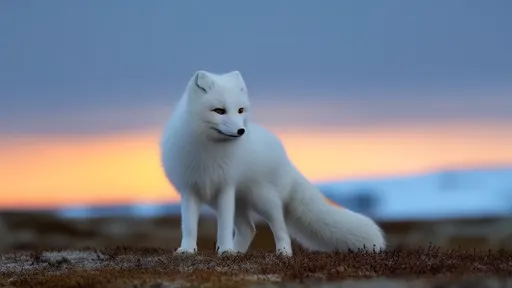
In the vast, windswept expanses of the Arctic tundra, a master of disguise performs a silent, biannual miracle. The Arctic fox, a resilient icon of the far north, undergoes a spectacular transformation not for vanity, but for sheer survival. Its fur, a dense and luxurious coat, does not remain a single, static color throughout the year. Instead, it shifts in a breathtaking display of natural adaptation, morphing from a brilliant, snow-reflecting white in the deep winter to a earthy, rock-and-soil-blending brown and grey for the summer months. This is not a simple change of outfit; it is a sophisticated physiological response to one of the most extreme seasonal shifts on the planet, a direct conversation between the animal's biology and the environment it calls home.
The primary driver behind this incredible chromatic shift is the relentless alteration of daylight hours, a phenomenon far more pronounced near the poles than anywhere else on Earth. Scientists term this environmental cue photoperiod. As the endless nights of the Arctic winter gradually yield to the midnight sun of summer, the changing length of day is detected by the fox's brain, specifically the pineal gland. This gland's sensitivity to light triggers a complex hormonal cascade. The key players in this process are hormones like melatonin, whose levels fluctuate dramatically with seasonal light exposure. It is this internal, hormone-driven clock that signals the precise time to begin the slow and meticulous process of molting and regrowing a completely new coat, a process that ensures the new fur's color is perfectly suited to the upcoming season's landscape.
The biological mechanism that translates this hormonal signal into a color change is rooted in the fox's hair follicles and the pigments they produce. The fox's coat color is determined by two primary types of melanin pigment: eumelanin, which provides black and brown hues, and pheomelanin, which provides red and yellow hues. During the summer molt, the follicles are instructed to produce a significant amount of these melanins, particularly eumelanin, resulting in the darker, grizzled coat that provides perfect camouflage against the exposed tundra, peat soil, and rocky outcrops. This summer coat, often appearing in two layers, is also notably shorter and less dense, a crucial adaptation for temperature regulation during the milder months.
Conversely, as the autumnal equinox passes and darkness begins to reclaim the sky, the hormonal signals shift once more. The production of dark melanin pigments is drastically reduced or halted altogether. The new winter hair that grows in is almost entirely devoid of pigment, creating the hollow, air-filled white hairs that define its iconic winter appearance. The structure of this winter fur is a marvel in itself. Each white hair is packed with air bubbles, which scatter light, making the fur appear brilliantly white. This structure also provides exceptional insulation, trapping body heat with incredible efficiency. The molt itself is a gradual process, often making the fox appear patchy or scruffy for weeks, a temporary vulnerability it must endure for its ultimate seasonal disguise.
The evolutionary advantage of this energetic investment is unequivocal: camouflage. For a predator that relies on stealth to approach prey like lemmings and voles scurrying across the snow, being a stark brown figure against a white backdrop would be a death sentence for its dinner plans. The white winter coat allows the fox to become virtually invisible, a ghost drifting across the ice, its approach unnoticed until the final, lethal pounce. Similarly, the summer coat transforms the fox into just another shadow or stone on the brown landscape, protecting it from larger predators like wolves and golden eagles while it hunts or tends to its young near its den. This adaptive coloration is a critical factor in the fox's success rate in both securing food and avoiding becoming food itself.
While the change is predominantly dictated by photoperiod, environmental factors like temperature and snow cover can fine-tune the timing. A particularly early snowfall or an unseasonably warm spell might slightly accelerate or delay the molting process, demonstrating a degree of flexibility within the rigid hormonal framework. This ensures the fox's camouflage remains effective even if the seasons transition faster or slower than average. The entire process, from the first signals in the brain to the full growth of a new coat, can take several weeks, underscoring the significant biological commitment this adaptation requires.
However, this exquisite adaptation, honed over millennia, now faces a unprecedented threat: climate change. The Arctic is warming at a rate more than twice the global average, leading to later autumn snowfalls and earlier spring thaws. This creates a potentially catastrophic mismatch. An Arctic fox in its pristine white coat standing on bare, brown ground in a snowless December is no longer camouflaged; it is a glaring target. This mismatch increases its energy expenditure for hunting, as stealth is compromised, and simultaneously increases its risk of predation. Conversely, a brown fox on an early spring snowfield is equally exposed. This phenological disconnect threatens to undermine the very survival strategy that has allowed the species to thrive in such a harsh environment for so long.
Beyond the immediate concern of camouflage, the energy cost of molting is immense. Growing an entirely new coat twice a year requires significant nutritional resources. If a fox is already stressed by reduced hunting success due to mismatched camouflage, the added physiological burden of the molt could lead to poorer coat quality, reduced fitness, and lower reproductive success. Researchers are closely monitoring populations to see if these incredible animals can adapt their timing fast enough to keep pace with the rapidly changing climate, or if this will become a significant pressure on their numbers.
The story of the Arctic fox's changing coat is far more than a fascinating natural curiosity. It is a powerful narrative about the intricate and delicate balance between an organism and its habitat. It demonstrates the profound power of evolution to craft solutions for survival in the most challenging places on Earth. Yet, it also serves as a stark and poignant warning. The same environmental cues that have orchestrated this beautiful transformation for centuries are now becoming unreliable. The fox's biannual costume change is a visible barometer for the health of the entire Arctic ecosystem, and currently, it is indicating a system under severe duress. Its future ability to blend seamlessly into the landscape depends less now on the slow turn of the seasons and more on the rapid actions of humanity half a world away.
By /Aug 21, 2025
By /Aug 21, 2025
By /Aug 21, 2025
By /Aug 21, 2025
By /Aug 21, 2025
By /Aug 21, 2025
By /Aug 21, 2025
By /Aug 21, 2025

By /Aug 21, 2025
By /Aug 21, 2025

By /Aug 21, 2025
By /Aug 21, 2025
By /Aug 21, 2025

By /Aug 21, 2025
By /Aug 21, 2025
By /Aug 21, 2025

By /Aug 21, 2025

By /Aug 21, 2025

By /Aug 21, 2025
By /Aug 21, 2025
