In the quiet, almost imperceptible movements of a gecko scaling a vertical glass pane lies a secret that has captivated medical scientists for decades. This remarkable ability, once the sole province of nature's most agile climbers, is now inspiring breakthroughs in surgical adhesives and wound closure techniques that could redefine how we heal the human body. The gecko's foot, with its intricate microscopic hairs and unique adhesive properties, demonstrates an evolutionary marvel of dry adhesion—strong enough to support the animal's weight yet easily detachable without leaving residue. Researchers have painstakingly decoded this biological blueprint, developing medical adhesives that mimic this mechanism for everything from sealing internal surgical incisions to attaching medical devices to moist tissues where traditional adhesives fail. What makes this innovation particularly extraordinary is its responsiveness: much like the gecko can instantly stick and unstick its feet, these medical adhesives can maintain secure attachment under challenging physiological conditions while allowing for clean removal when their purpose is served.
Beyond the realm of adhesion, the natural world continues to offer astonishing medical insights through the study of shark skin. At first glance, the rough texture might seem inconsequential, but this unique surface structure possesses naturally antimicrobial properties that prevent microorganisms from colonizing—a defense mechanism sharks have evolved in their bacteria-filled marine environment. This discovery has profound implications for combating hospital-acquired infections, particularly through the development of synthetic surfaces that replicate shark skin's microscopic pattern. When applied to high-touch areas in healthcare settings—door handles, bed rails, and surgical instruments—these biomimetic surfaces significantly reduce the transmission of dangerous pathogens without relying on chemical disinfectants. The innovation represents a paradigm shift in infection control, moving from reactive chemical warfare against microbes to proactive physical prevention inspired by evolutionary adaptations that have stood the test of time.
The mysteries of marine biology extend even deeper with the humble horseshoe crab, a living fossil whose blue blood contains a miraculous substance that has become indispensable to modern medicine. This ancient creature's circulatory system employs amebocytes—special cells that instantly detect and encapsulate harmful pathogens—providing an immune response so uniquely sensitive that it forms the basis of the Limulus Amebocyte Lysate (LAL) test. This test remains the global standard for detecting endotoxins in intravenous drugs, vaccines, and medical devices, ensuring that these life-saving products are free from bacterial contamination that could cause fatal reactions in patients. The horseshoe crab's biological gift exemplifies how organisms we might otherwise overlook can hold solutions to complex medical challenges, their evolutionary adaptations offering refined systems that human technology struggles to replicate through conventional means.
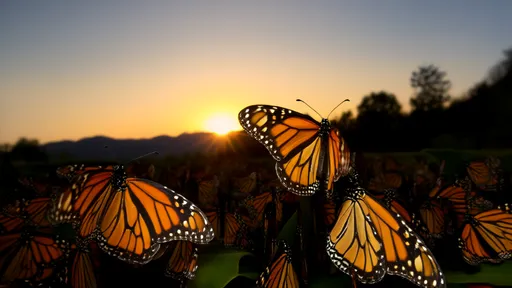
Perhaps one of the most visually striking examples of biomimicry emerges from the butterfly wing, whose iridescent colors are not produced by pigments but by nanoscale structures that manipulate light. This structural coloration has inspired the development of advanced diagnostic tools that can detect minute changes in biological tissues. By creating synthetic surfaces that mimic these microscopic architectures, scientists have developed sensors that change color in response to specific biochemical markers, potentially enabling earlier detection of diseases like cancer through simple, non-invasive tests. The intricate patterns on wings that evolved to attract mates or provide camouflage are now guiding the creation of medical technologies that could save countless lives, demonstrating that nature's aesthetic wonders often conceal profound functional intelligence.
In the domain of surgical innovation, the mosquito's proboscis has emerged as an unexpected mentor. This delicate feeding structure penetrates skin with minimal pain and trauma despite its relative size, thanks to a sophisticated design that incorporates serrated, vibration-enhanced components. Engineers and medical researchers have studied this natural microneedle system to develop less painful hypodermic needles and minimally invasive surgical instruments. The latest prototypes incorporate asymmetrical serrations and vibration mechanisms that reduce insertion force and tissue damage, making procedures more comfortable for patients while improving precision for clinicians. This approach exemplifies how even creatures we consider pests can offer elegant solutions to long-standing medical challenges, their reviled biology containing principles worth emulating.
The animal kingdom's contributions to medical progress extend to pharmaceutical development through the study of venomous creatures. From the venom of cone snails, researchers have isolated compounds that became the basis for potent painkillers that work through novel mechanisms, offering hope for patients with chronic pain that doesn't respond to conventional treatments. The Gila monster's saliva provided the template for a breakthrough diabetes medication that helps regulate blood sugar through a unique pathway. Even the deadly venom of the Brazilian pit viper led to the development of life-saving blood pressure medications. These discoveries highlight how substances evolved as weapons in nature's arms race can be repurposed as healing agents, their molecular precision offering targeted therapies that often outperform synthetic compounds developed through traditional drug discovery methods.
As biomimetic medicine advances, the field is increasingly looking toward collaborative creation rather than simple imitation. The next frontier involves not just copying nature's designs but engaging in what might be termed bio-informed innovation—where biological principles inspire entirely new approaches that may diverge from their natural prototypes while remaining grounded in evolutionary wisdom. This approach acknowledges that while nature offers brilliant solutions, they are solutions optimized for survival in specific environmental contexts, not necessarily for human medical applications. The most promising developments now emerge from dialogues between biology and engineering—where an understanding of gecko adhesion mechanisms leads to adhesives that outperform their natural inspiration in wet environments, or where the study of shark skin informs materials that resist bacterial colonization more effectively than the original biological model.
The ethical dimensions of this burgeoning field warrant careful consideration as well. While harnessing nature's innovations offers tremendous benefits, it also raises questions about biodiversity conservation, sustainable harvesting of biological materials, and equitable access to resulting medical advances. The story of the horseshoe crab proves particularly instructive—its blood's medical value has led to harvesting practices that threaten wild populations, prompting efforts to develop synthetic alternatives. Truly sustainable biomimetic medicine requires looking beyond what we can take from nature to how we can learn from it while preserving the very systems that inspire innovation. This perspective recognizes that the most valuable resource nature provides may not be specific compounds or structures but the creative principles that generated them through millions of years of evolutionary experimentation.
Looking forward, the integration of artificial intelligence with biological research promises to accelerate biomimetic discovery exponentially. Machine learning algorithms can now analyze vast databases of biological traits and evolutionary patterns, identifying promising medical applications that might escape human researchers. These systems can simulate how biological structures would perform in medical contexts, predicting potential applications before physical prototypes are ever built. This computational approach to biomimicry represents a new chapter in humanity's relationship with nature's designs—one where we don't just observe and imitate but engage in a computationally-enhanced dialogue with biological intelligence, potentially unlocking medical breakthroughs that draw on the collective wisdom of countless species across the tree of life.
What becomes increasingly clear is that the division between natural and human-made innovation represents a false dichotomy. The most promising medical advances emerge not from choosing between nature and technology but from integrating their strengths—combining evolutionary refinement with human intentionality, biological materials with synthetic enhancement, ancient wisdom with contemporary understanding. This integrative approach acknowledges that nature has been solving complex engineering problems for millennia, developing energy-efficient, sustainable, and elegant solutions that human technology, for all its sophistication, is only beginning to appreciate. The future of medical innovation may well depend on our humility to learn from life forms we once considered merely part of the backdrop to human existence, recognizing that the boundaries between biology and technology are increasingly permeable, and that our health future may depend on embracing our place within rather than apart from the natural world.

By /Aug 21, 2025
By /Aug 21, 2025

By /Aug 21, 2025

By /Aug 21, 2025
By /Aug 21, 2025

By /Aug 21, 2025
By /Aug 21, 2025
By /Aug 21, 2025
By /Aug 21, 2025
By /Aug 21, 2025
By /Aug 21, 2025
By /Aug 21, 2025

By /Aug 21, 2025
By /Aug 21, 2025

By /Aug 21, 2025
By /Aug 21, 2025
By /Aug 21, 2025
By /Aug 21, 2025
By /Aug 21, 2025

By /Aug 21, 2025
